
Silicon carbide refractory is a high-performance refractory product made mainly from SiC (silicon carbide) as aggregate and powder, combined with binders (clay, oxide bond, nitride bond, etc.) and sintered at high temperature.
It is widely used in high-temperature, corrosion, abrasion, and rapid heat‑change environments.
| TYPICAL CHEMICAL ANALYSIS | TYPICAL PHISICAL PROPERTIES | ||
| SiC | ≥98% | Hardness: | Mohs:9.15 |
| SiO2 | ≤1% | Melting Point: | Sublimes at 2250 ℃ |
| H2O3 | ≤0.5% | Maximum service temperature: | 1900℃ |
| Fe2O3 | ≤0.3% | Specific Gravity: | 3.2-3.45 g/cm3 |
| F.C | ≤0.3% | Bulk density(LPD): | 1.2-1.6 g/cm3 |
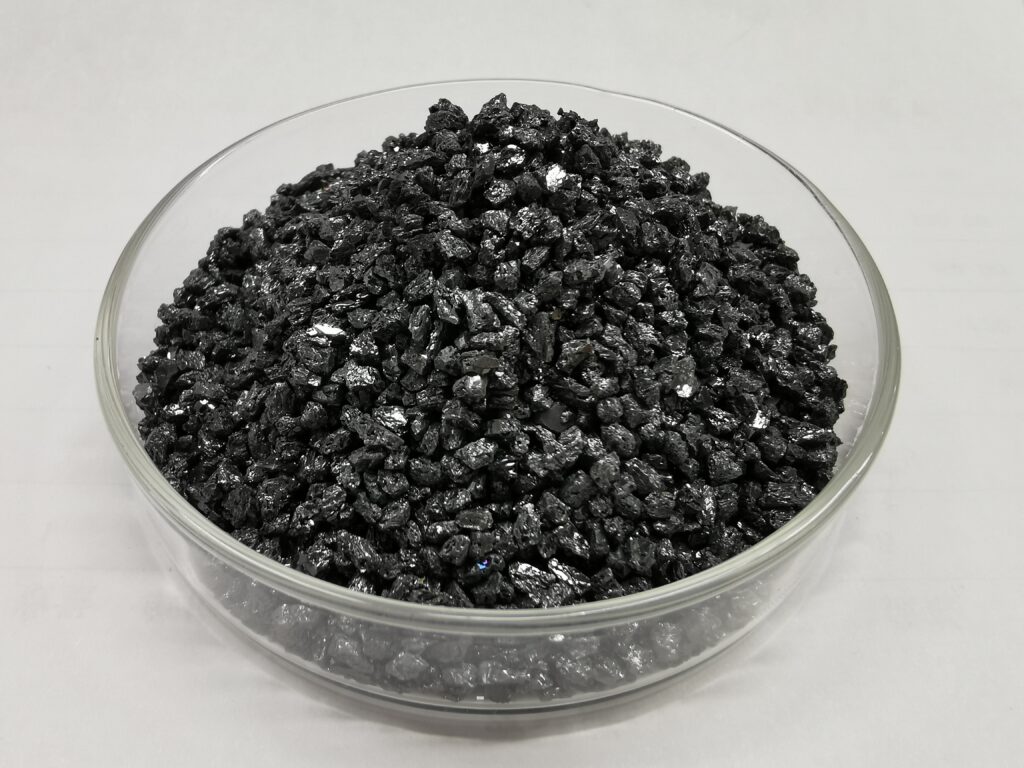
| Magnetic content | ≤0.02% | Color: | Black |
| Particle shape: | Hexagonal | ||
Key Properties
- Extreme high temperature resistance: Working temperature up to 1600–1800°C; special grades can exceed 2000°C.
- Excellent thermal conductivity: Fast heat transfer, uniform temperature, good thermal shock resistance.
- Outstanding wear & corrosion resistance: Resistant to acid, alkali, molten metal, slag, and dust erosion.
- High strength & hardness: Second only to diamond.
- Good oxidation resistance: Forms a protective SiO₂ film at high temperature.
- Non-wetting: Not easily wetted by molten metal or slag.
Main Types
- Oxide-bonded SiC refractory (clay-bonded, alumina-bonded)
- Nitride-bonded SiC (Si₃N₄-bonded, high strength, high temperature)
- Recrystallized SiC (RSiC)
- Sintered SiC (SSiC)
- SiC composite refractories (SiC–Al₂O₃, SiC–carbon, etc.)
Typical Applications
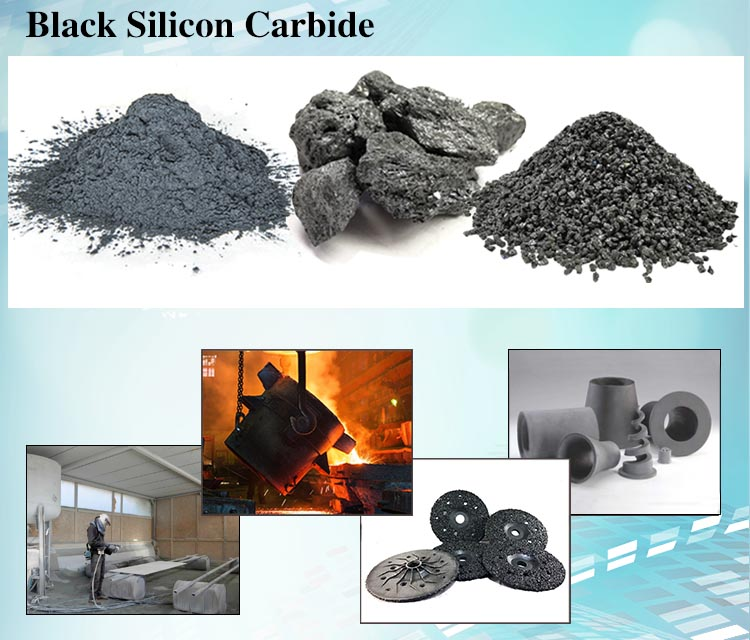
- High-temperature kiln furniture: saggers, setter plates, beams
- Burner nozzles, furnace linings
- Aluminum, smelting, and non-ferrous metal industries
- Incinerators, waste treatment furnaces
- Heat exchangers, thermocouple protection tubes
- Industrial furnaces with rapid heating and cooling
Advantages Over Traditional Refractories
- Much longer service life than alumina, magnesia, fireclay refractories
- Better thermal shock resistance (not easy to crack)
- Stronger resistance to slag and corrosion
- Lighter weight, higher energy efficiency