
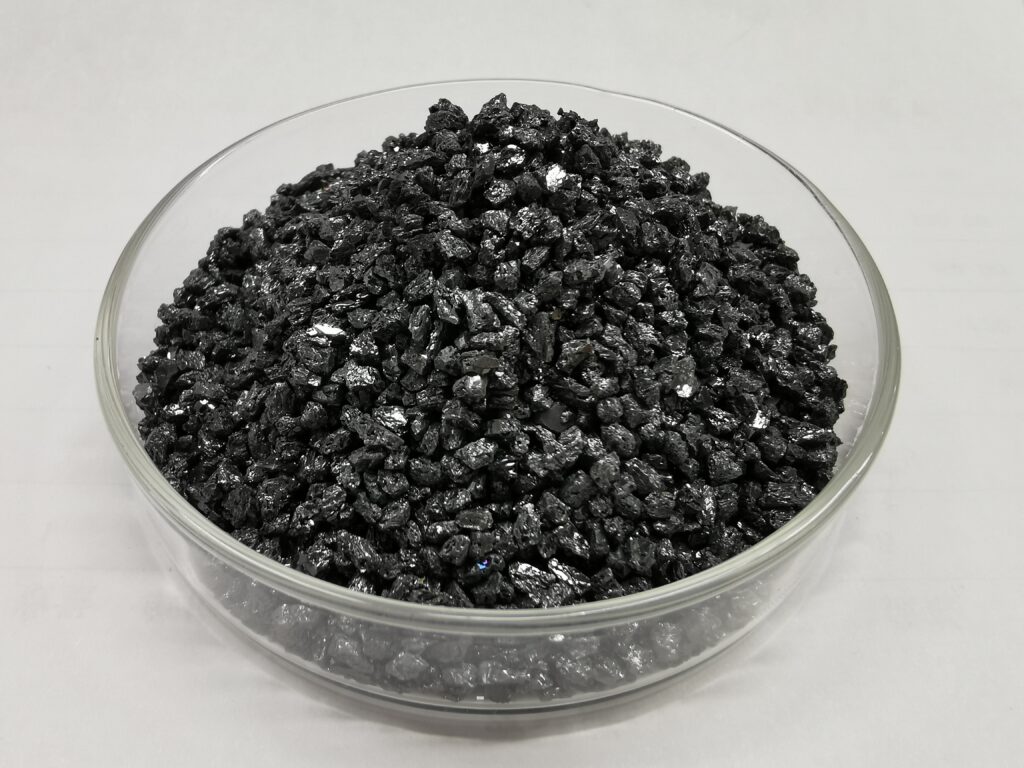
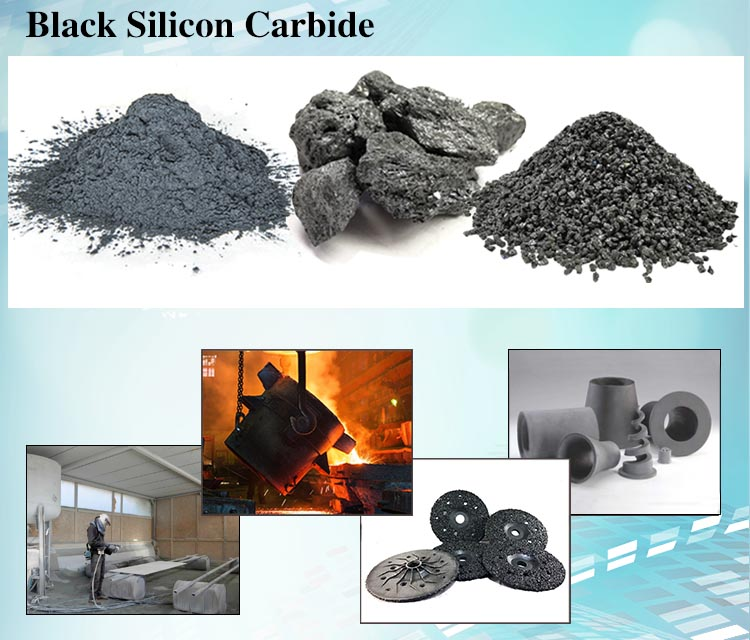
Metallurgical grade black silicon carbide is a synthetic material produced in electric resistance furnaces at temperatures above 2200°C. Its primary raw materials are high-quality silica sand (SiO₂) and petroleum coke (C). It is characterized by its black or dark blue-black color, metallic luster, and lower purity (typically around 98.5% SiC) compared to its counterpart, green silicon carbide (which is purer, >99% SiC, and used for precision grinding and semiconductors).
Key Properties
The properties that make it indispensable in metallurgy and other industries include:
High-Temperature Strength: Maintains its structure and strength at very high temperatures.
Excellent Thermodynamic Properties:
Strong Reducibility: At high temperatures, it readily gives up its carbon and silicon to react with oxygen and other elements.
Exothermic Reaction: Its oxidation reactions release a significant amount of heat.
High Thermal Conductivity: Efficiently transfers heat.
Good Abrasiveness: Though not as hard as green SiC, it is still harder than most metals and many minerals.
Chemical Inertness: Resists attack by acids, slags, and molten metals.
Primary Applications & Functions
The applications of metallurgical grade SiC are almost entirely based on its role as a powerful high-temperature reductant, alloying agent, and energy-saving additive.
1. Steelmaking (Largest Application)
In electric arc furnaces (EAF), ladle furnaces, and foundries, it is used as a multi-functional additive:
Deoxidizer: It is a more efficient deoxidizer than traditional ferrosilicon. The silicon and carbon content aggressively removes oxygen from molten steel, improving the steel’s cleanliness and mechanical properties.
Reaction:
SiC + O₂ → SiO₂ + CO
Recarburizer: It is an excellent source of carbon to adjust the final carbon content of the steel to the desired specification.
Energy Saver (Heating Agent): The oxidation of SiC is highly exothermic. Adding it to the furnace or ladle helps raise the temperature of the molten metal, reducing the required electrical energy input and shortening tap-to-tap times.
Alloying Agent: It simultaneously adds both silicon and carbon to the melt, adjusting the chemical composition.
2. Iron Casting (Foundries)
In cupola and induction furnaces for cast iron production:
Inoculant / Pre-conditioner: Adding SiC to molten iron (a process often called “iron pre-conditioning”) promotes the formation of graphite flakes or nodules (in ductile iron). This:
Prevents Chill: Reduces the formation of hard, brittle cementite (iron carbide), preventing “chilled” edges that are unmachinable.
Improves Microstructure: Results in a more uniform and refined graphite structure.
Enhances Properties: Increases the tensile strength, hardness, and thermal conductivity of the final cast iron product.
3. Production of Ferroalloys
It serves as a reducing agent in the submerged arc furnaces used to produce various ferroalloys:
Silicon Metal and Ferrosilicon: In these processes, SiC is an intermediate product that plays a crucial role in reducing silica to silicon.
Other Alloys: It can also be used in the production of silicomanganese and other complex alloys.
4. Refractory Additives
While not the primary ingredient, crushed metallurgical grade SiC is often added to MgO-C (magnesia-carbon) and Al₂O₃-SiC-C (alumina-silicon carbide-carbon) refractories used to line steelmaking furnaces and ladles. Its benefits include:
Increased Slag Resistance: Improves the refractory’s ability to withstand corrosive slags.
Enhanced Thermal Shock Resistance: Helps the brick withstand rapid temperature changes without cracking.
Improved High-Temperature Strength.
5. Other Applications
Abrasives: For manufacturing bonded grinding tools (like grinding wheels) and coated abrasives where extremely high purity is not required. It is also used for blast cleaning and lapping.
Non-Ferrous Metallurgy: Used as a reductant in the smelting of certain non-ferrous metals.