
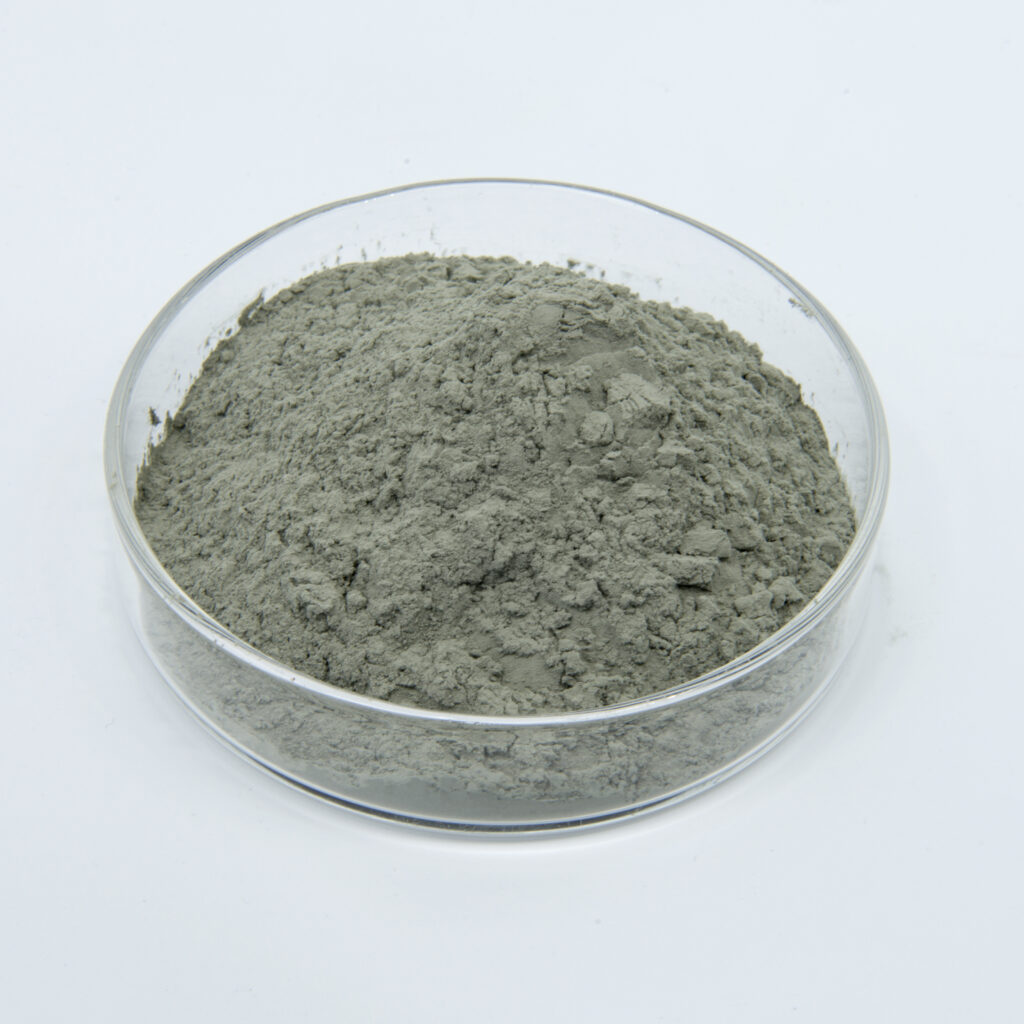
While green silicon carbide (SiC) micropowder is a common abrasive for grinding hard materials like ceramics (e.g., AlN, sapphire), it is not typically used for wafer polishing, especially for semiconductor wafers (Si, GaAs, SiC, etc.)
1. Why Green SiC is Unsuitable for Wafer Polishing
Surface Damage:
SiC micropowder (even fine grades like #2000+) is harder than most wafers (Mohs 9.2 vs. Si ~7, GaAs ~4.5), causing deep sub-surface cracks and scratches.Contamination Risk:
SiC particles can embed into softer wafers (e.g., silicon) or react with surfaces, degrading electrical properties.Lack of Nanoscale Precision:
Even sub-micron SiC lacks the uniformity needed for atomic-level planarization (Ra < 0.5 nm required for advanced nodes).
2. Preferred Abrasives for Wafer Polishing
A. Silicon (Si) & Germanium (Ge) Wafers
Final Polishing:
Colloidal Silica (SiO₂): Chemically softens the surface for defect-free finishes (Ra ~0.1 nm).
Ceria (CeO₂): Used in chemical mechanical polishing (CMP) for high material removal rates (MRR).
Rough/Intermediate Polishing:
Alumina (Al₂O₃): Less aggressive than SiC, used for pre-polishing.
B. Silicon Carbide (SiC) Wafers
Diamond Micropowder:
The only abrasive harder than SiC (Mohs 10), used in slurries for grinding/lapping (e.g., 1–10 μm grits).Diamond + CMP:
Combines mechanical removal (diamond) with chemical oxidation (e.g., H₂O₂-based slurries).
C. Gallium Arsenide (GaAs) & Other III-V Wafers
Colloidal Silica/Ceria:
Low-pressure polishing to avoid crystal damage.Bromine-Methanol Solutions:
Chemically etch after mechanical polishing.
3. When Green SiC Might Be Used for Wafers
Very Early Stages (e.g., wafer shaping/edge grinding):
Coarse SiC (#400–#800) for rapid material removal, but switched to softer abrasives ASAP.Sapphire (Al₂O₃) Substrates:
SiC can be used for lapping, but final polish requires diamond or silica.
4. Key Parameters for Wafer Polishing
Abrasive Size:
Final polish uses 10–100 nm particles (e.g., colloidal silica).pH & Chemistry:
CMP slurries are pH-controlled (e.g., alkaline for Si, acidic for metals).Pressure/Speed:
Low pressure (<5 psi) to minimize subsurface damage.
5. Alternatives to SiC for Cost-Sensitive Applications
Alumina (Al₂O₃) Slurries:
Cheaper than diamond but less aggressive than SiC.Hybrid Processes:
SiC for rough grinding → Alumina for pre-polish → Silica/Ceria for final polish.