
Green silicon carbide is generally NOT used for the final polishing of optical glass. Its primary role is in the earlier, more aggressive grinding and lapping stages. Using it for polishing would likely ruin the glass surface.
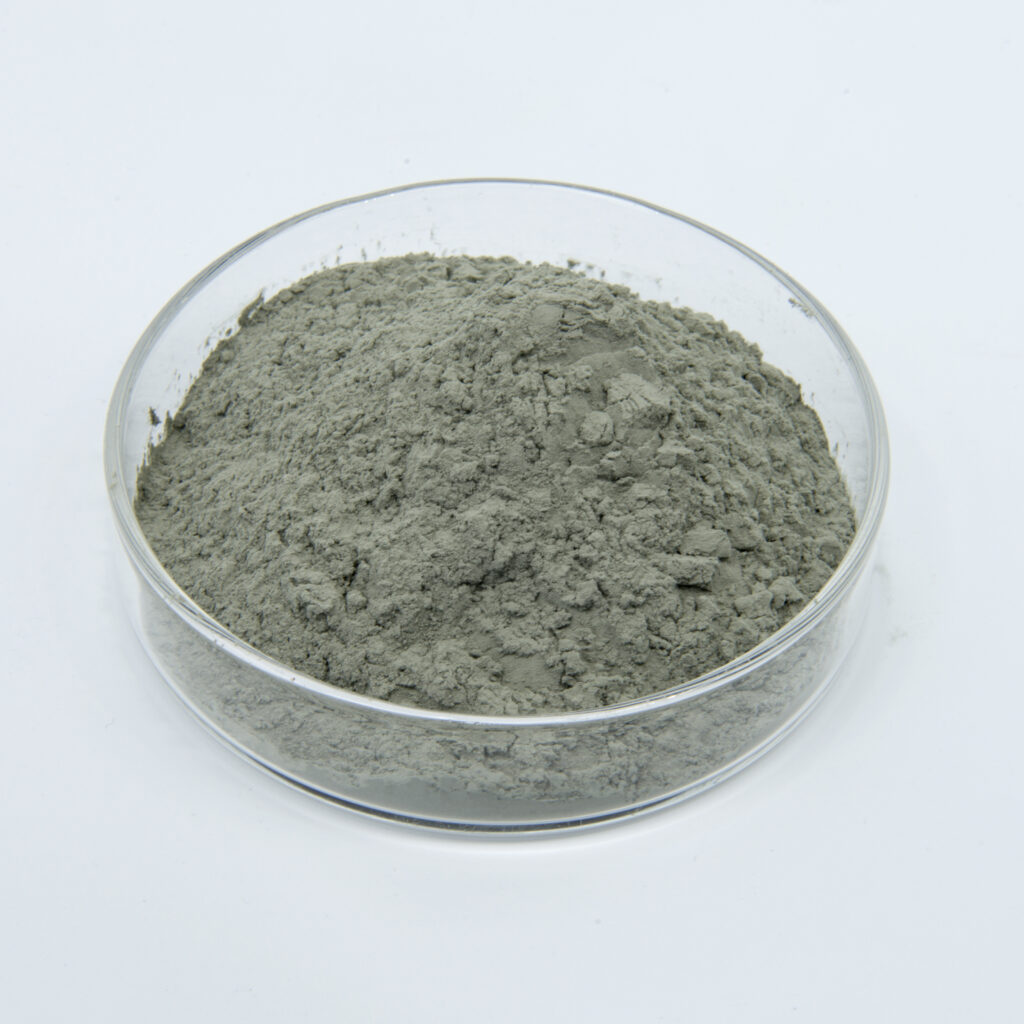
Core Principle: Polishing vs. Grinding/Lapping
Polishing: The goal is to achieve a perfectly smooth, transparent, and scratch-free surface at the atomic/molecular level, removing the amorphous damaged layer left by grinding. This requires micron or sub-micron-sized abrasives that remove material through a chemical-mechanical flow, not brittle fracture.
Grinding/Lapping: The goal is to rapidly remove material, shape the lens, and achieve the correct curvature and thickness, while creating a uniform, finely pitted “ground” surface. This is a process of brittle fracture removal.
The Correct Role of Green SiC in Optical Glass
Green SiC is a critical abrasive in the shaping and fine grinding stages that come BEFORE polishing. Here’s the standard process sequence:
Milling/Shaping: Using diamond tools or very coarse SiC to generate the basic curve.
Coarse Grinding: Using coarse green SiC grits (e.g., F80 to F220) mixed with water on a cast iron or brass tool to rapidly remove stock and correct the figure.
Fine Grinding / Lapping: This is the primary domain for fine green SiC powders.
Grit Range: F320 to F1200 (approximately 30µm down to 3µm particle size).
Purpose: To sequentially remove the damage layer from the previous, coarser step and produce a uniform, matte, “gray” surface with very fine and even pits. Each finer step removes the sub-surface cracks from the step before.
Process: The SiC slurry is used between the glass workpiece and a matching lapping tool (often of a softer metal like tin or copper). The abrasive becomes embedded in the softer tool, which then grinds the harder glass.
Polishing: After the final fine grinding step (e.g., with F1200 SiC), the lens is thoroughly cleaned. All SiC must be eliminated. The process then switches to:
Abrasive: Cerium Oxide slurry (most common), zirconium oxide, or colloidal silica.
Tool: A soft pitch or polyurethane polisher.
This stage removes the last ~10-20 microns of damaged glass and produces the transparent, scratch-free surface.
Key Specifications for Optical-Grade Green SiC
If used for fine grinding/lapping optical glass, the SiC powder must be of high purity and tightly graded.
Chemical Purity: High-purity green SiC (98%+ SiC) is essential to avoid contaminating the glass surface with metallic impurities.
Particle Size Distribution: The grit must have a very narrow size distribution. “Micron powders” (e.g., W7, W10, W14 corresponding to ~7µm, 10µm, 14µm) are specified. Broad distributions cause deeper scratches from larger outliers.
Sharpness and Friability: It should fracture to maintain sharp cutting edges.