
1. What is Black Silicon Carbide (SiC) for Refractories?
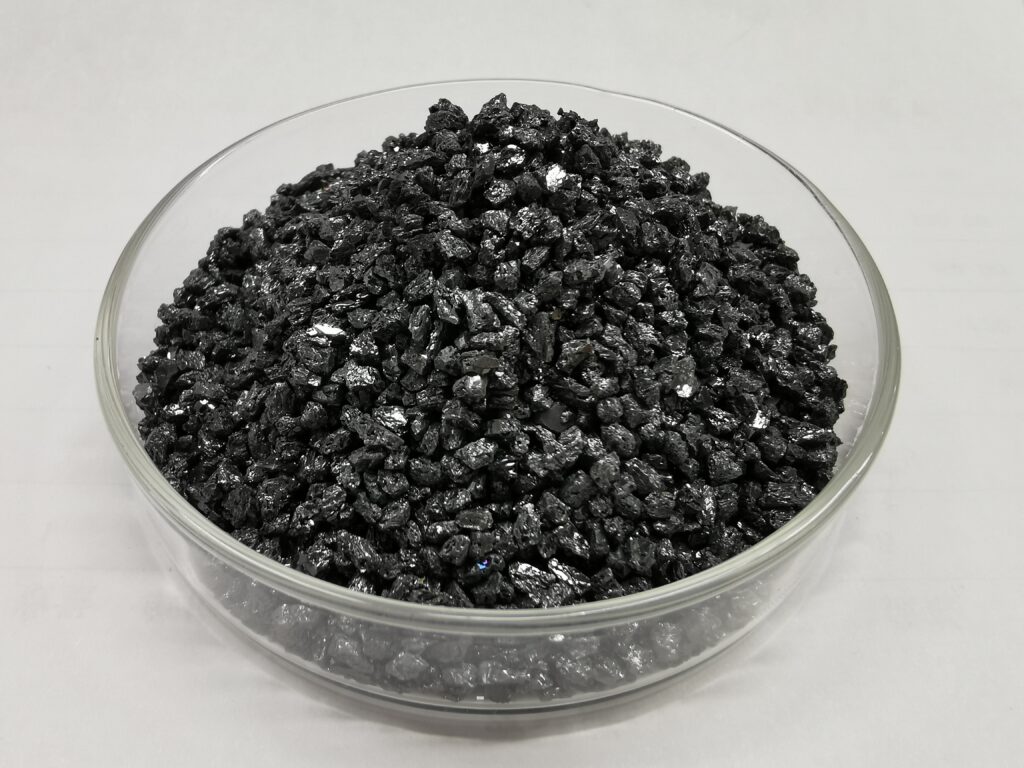
It is a synthetic material produced by reducing high-purity silica sand with petroleum coke in a high-temperature electric resistance furnace (Acheson process). The resulting material is crushed, milled, and graded into various grain sizes.
Key Composition: Primarily SiC (≥97-98.5%), with small amounts of free carbon, silica, and other impurities.
Key Property: Its covalent bonding gives it a unique set of characteristics ideal for harsh environments.
2. Key Properties & Their Benefits in Refractories
| Property | Description | Benefit in Refractory Applications |
|---|---|---|
| High Thermal Conductivity | Exceptional heat transfer capability (far superior to most oxides). | 1. Excellent Thermal Shock Resistance: Rapidly dissipates heat, minimizing thermal stress and preventing crack propagation. 2. Improved Heat Uniformity: Promotes even temperature distribution in furnace linings. |
| High Strength & Hardness | Extreme hardness (Mohs ~9.5) and mechanical strength, retained at high temperatures. | 1. Superior Abrasion & Erosion Resistance: Withstands冲刷 of molten slag, metal, and particle-laden gases. 2. High Hot Load Strength: Maintains structural integrity under load at high temperatures. |
| Excellent Chemical Inertness | Highly resistant to attack by many acids, slags, and molten metals (especially non-ferrous). | 1. Excellent Corrosion Resistance: Especially against acidic slags. 2. Non-wetting by Molten Aluminum & Zinc: Makes it ideal for furnaces and components in non-ferrous metal industries. |
| High Refractoriness | Does not melt but decomposes at ~2700°C in inert atmosphere. Oxidizes in air above ~1200°C. | Provides stability in high-temperature environments. (Note: Oxidation is the main limiting factor, managed via mix design). |
3. Primary Applications in Refractory Products
SiC is used as a key aggregate or additive to impart its superior properties to monolithic and shaped refractories.
A. Major Application Areas:
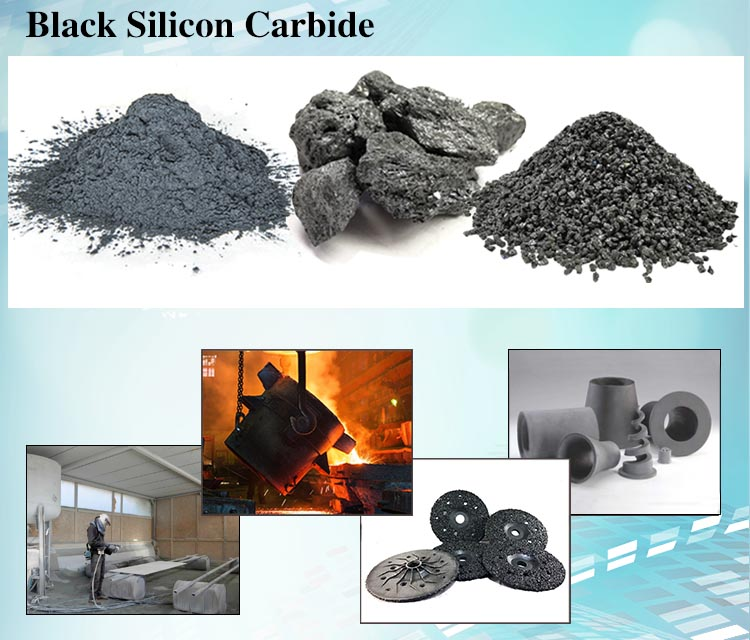
Blast Furnaces & Ironmaking: Troughs, runners, torpedo ladle linings – where abrasion from hot metal and slag is severe.
Non-Ferrous Metal Industries (Al, Cu, Zn): Melting and holding furnace linings, launder systems, tap blocks, thermocouple protection tubes. Its non-wetting property is crucial here.
Ceramic Kilns & Furnaces: Kiln furniture (saggers, setters, rollers) – SiC’s high thermal conductivity and strength allow faster firing cycles and support heavier loads.
Incineration & Waste-to-Energy Plants: Linings for areas exposed to abrasive fly ash and corrosive gases.
Chemical & Petrochemical: Linings for reactors and gasifiers exposed to harsh environments.
B. Refractory Product Forms:
SiC-based Bricks & Shapes: Containing 50-90% SiC. Used for extreme abrasion/corrosion zones (e.g., aluminum furnace sidewalls, kiln car tops).
Refractory Castables & Monolithics:
Low-Cement Castables (LCC) & Ultra-Low Cement Castables (ULCC): Adding 10-30% SiC aggregate significantly boosts thermal shock and abrasion resistance for linings in cyclones, burners, and lower walls of furnaces.
Plastics & Ramming Mixes: Used for patching and lining areas like furnace hearths.
Specialty Products: Crucibles, tuyères, burner nozzles.
4. Critical Considerations & Limitations
Oxidation: The Achilles’ heel. Above ~1200°C in oxidizing atmospheres, SiC oxidizes to SiO₂, which can cause volume expansion and eventual degradation.
Mitigation Strategies: Use in non-oxidizing or reducing atmospheres, use of antioxidants (Si, Al, Si₃N₄) in the mix, or formation of a protective glaze/coating.
Alkali Attack: Vulnerable to attack by strong alkalis and basic (high CaO) slags at high temperatures.
Cost: More expensive than common refractory aggregates like bauxite or brown fused alumina. Its use is justified where performance gains outweigh cost.
5. Grading and Selection for Refractories
Grain Size: Supplied in a range from coarse grits (e.g., 0-1mm, 1-3mm) to fine powders (200 mesh, 325 mesh). The grain size distribution is carefully designed to achieve optimal packing density and performance in the final refractory mix.
Purity: Refractory-grade typically has a lower purity (97-98.5%) compared to abrasive or metallurgical grades. Controlled levels of free carbon and silica can be acceptable depending on the application.