
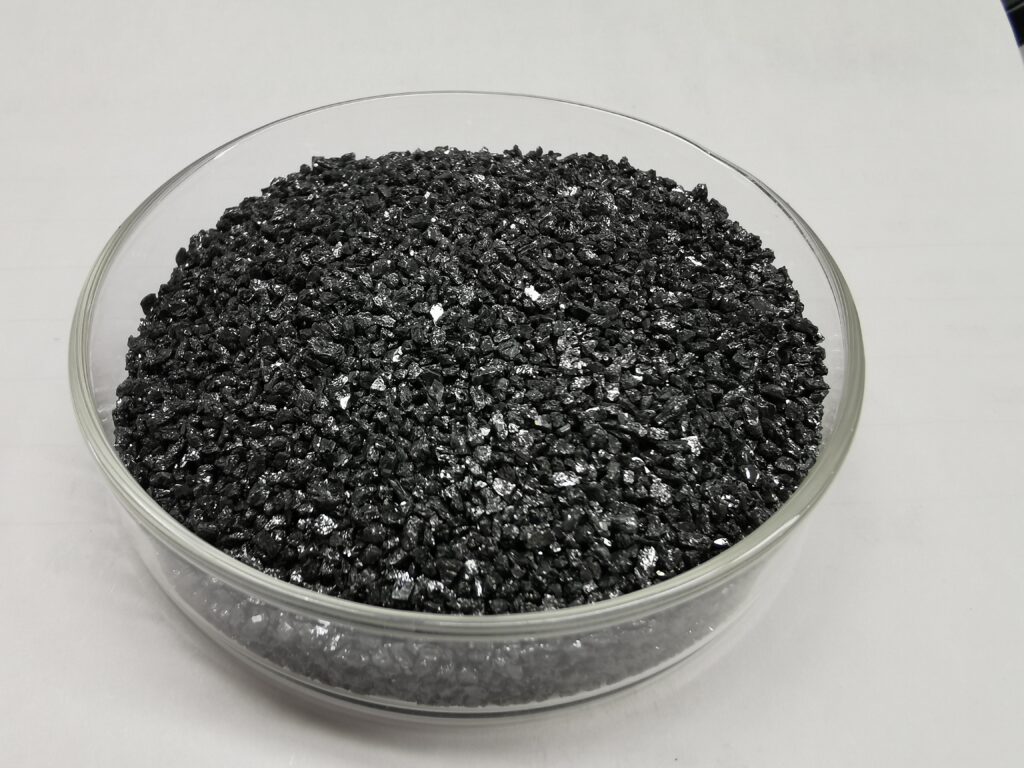
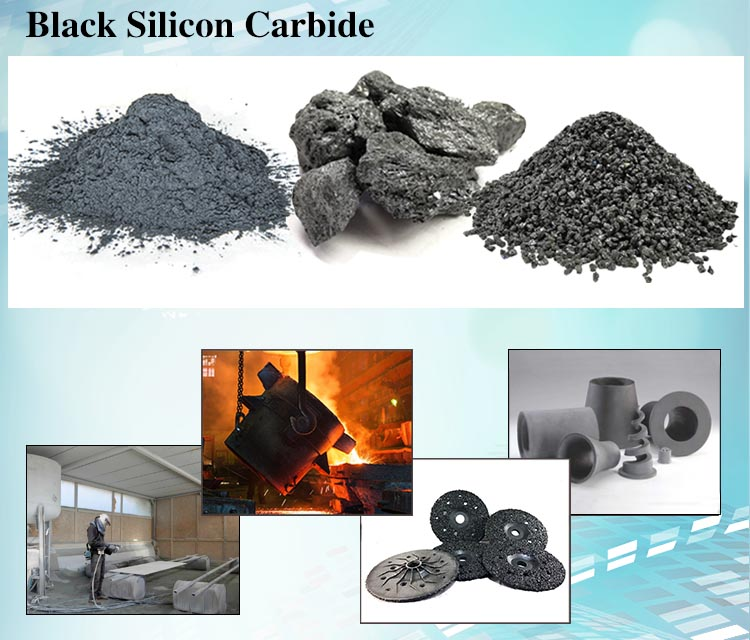
Black Silicon Carbide (Black SiC) for Furnace Linings
Black silicon carbide is one of the most widely used high-performance refractory materials for furnace linings, especially in high-temperature, corrosive, and thermal-shock environments.
Advantages of Black SiC for Furnace Linings
- Extremely high temperature resistance
- Refractoriness up to ~2700 °C
- Stable service at 1400–1800 °C without softening or deformation
- Excellent thermal shock resistance
- Low thermal expansion + high thermal conductivity
- Resists cracking during rapid heating and cooling cycles
- High thermal conductivity
- Improves temperature uniformity inside the furnace
- Reduces energy consumption and shortens firing cycles
- Strong corrosion & erosion resistance
- Resists attack by molten metals, slags, acids, alkalis, and oxides
- Minimizes contamination of fired products
- High hardness & mechanical strength
- Wear-resistant and durable under mechanical load
- Long service life, lowering maintenance and replacement costs
- Good chemical stability
- Stable in oxidizing, reducing, and inert atmospheres at high temperatures
- Forms a protective SiO₂ layer in oxidizing conditions
Typical Applications
- High-temperature furnace linings
- Kiln furniture, saggers, setter plates
- Incinerators and waste treatment furnaces
- Metallurgical melting and sintering furnaces
- Ceramic and powder metallurgy furnaces
- Industrial furnace hearths, side walls, and nozzles
Why Black SiC Instead of Other Refractories?
Compared with fire clay, high-alumina, or even corundum refractories:
- Much better thermal shock resistance
- Far higher thermal conductivity
- Significantly longer service life
- Better resistance to corrosion and abrasion
- Lighter structure with higher strength