
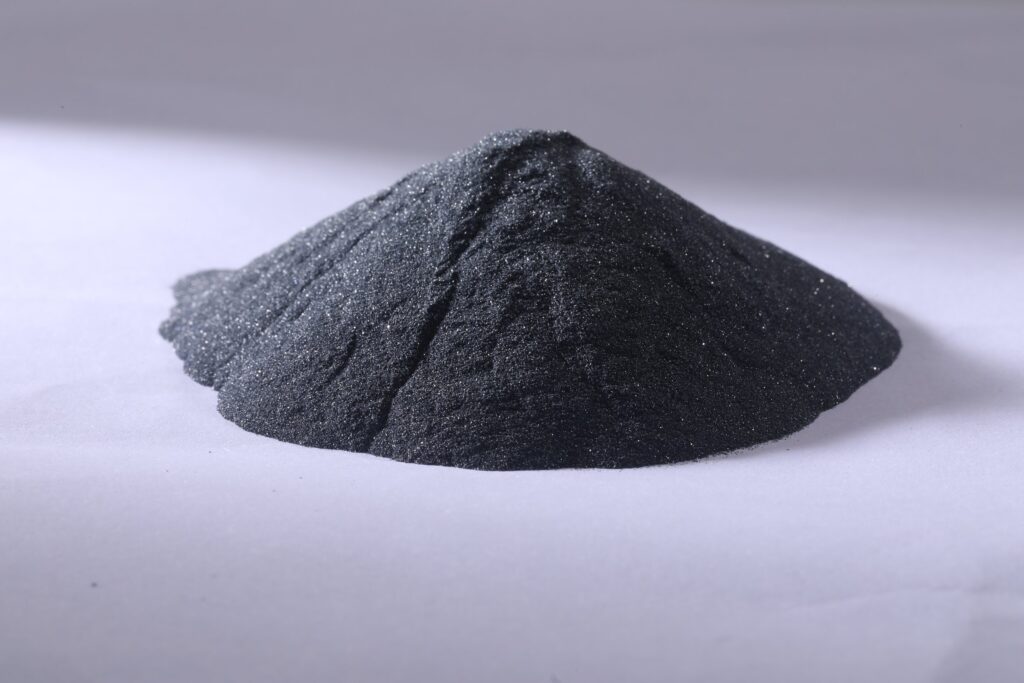
black silicon carbide refers to a class of high-performance, man-made ceramic materials used for the most critical wear-resistant and corrosion-resistant components. These pumps are designed to handle slurries and liquids that would quickly destroy standard metal pumps.
1. Why is Black Silicon Carbide Used in Pumps?
Ceramic pumps are often the go-to solution for pumping abrasive, corrosive, or a combination of both (abrasive-corrosive) media. Standard materials like stainless steel fail rapidly in these conditions.
Black silicon carbide’s exceptional properties make it ideal for this demanding role:
Extreme Hardness: With a Mohs hardness of 9.5, it is one of the hardest materials available, providing outstanding resistance to wear from solid particles (e.g., sand, minerals, ash).
Excellent Corrosion Resistance: It resists attack from a wide range of acids, alkalis, and salts, ensuring longevity in chemical processing.
High Mechanical Strength: It has very high compressive strength, allowing it to withstand significant operating pressures.
Good Thermal Shock Resistance: It can withstand rapid temperature changes without cracking.
Lightweight: It is significantly lighter than metals like tungsten carbide.
| TYPICAL CHEMICAL ANALYSIS | TYPICAL PHISICAL PROPERTIES | ||
| SiC | ≥98% | Hardness: | Mohs:9.15 |
| SiO2 | ≤1% | Melting Point: | Sublimes at 2250 ℃ |
| H2O3 | ≤0.5% | Maximum service temperature: | 1900℃ |
| Fe2O3 | ≤0.3% | Specific Gravity: | 3.2-3.45 g/cm3 |
| F.C | ≤0.3% | Bulk density(LPD): | 1.2-1.6 g/cm3 |
| Magnetic content | ≤0.02% | Color: | Black |
| Particle shape: | Hexagonal | ||
2. Key Applications in Pumps
Black silicon carbide is typically not used for the entire pump body due to cost and manufacturing complexity. Instead, it is used for the most critical components that face the harshest conditions:
Mechanical Seal Faces (The Most Common Application):
This is the premier use of SiC in pumps. A mechanical seal requires a hard, flat, and durable pair of rings (the stationary and rotating faces) to prevent leakage.
Common pairings include:
SiC vs. SiC: Used for the most severe abrasive and abrasive-corrosive services. This is the top-tier choice for ceramic pumps.
SiC vs. Tungsten Carbide: For less abrasive but highly corrosive duties.
SiC vs. Carbon: For applications requiring better lubrication.
Sleeves and Bushings:
In applications where lubrication is difficult, SiC’s self-lubricating properties and wear resistance make it ideal for sleeves and bushings.
Throat Bushings and Liners:
Used as restrictor bushings in the pump casing to protect other components from wear.