
Black Silicon Carbide (Black SiC) for Refractory Use
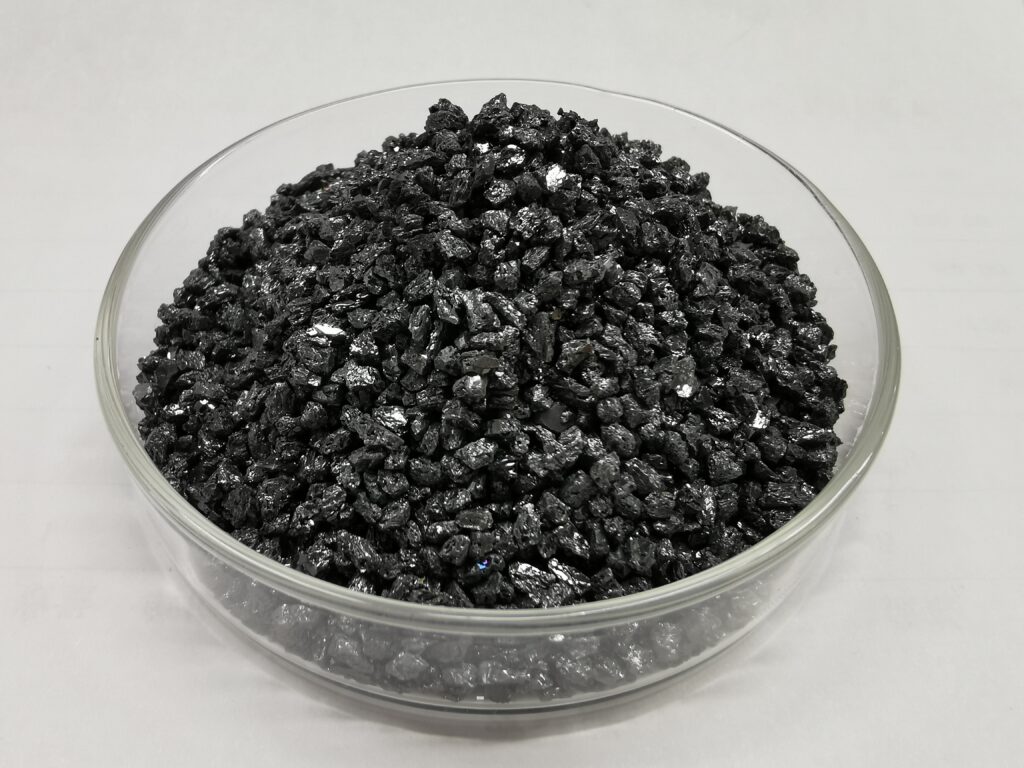
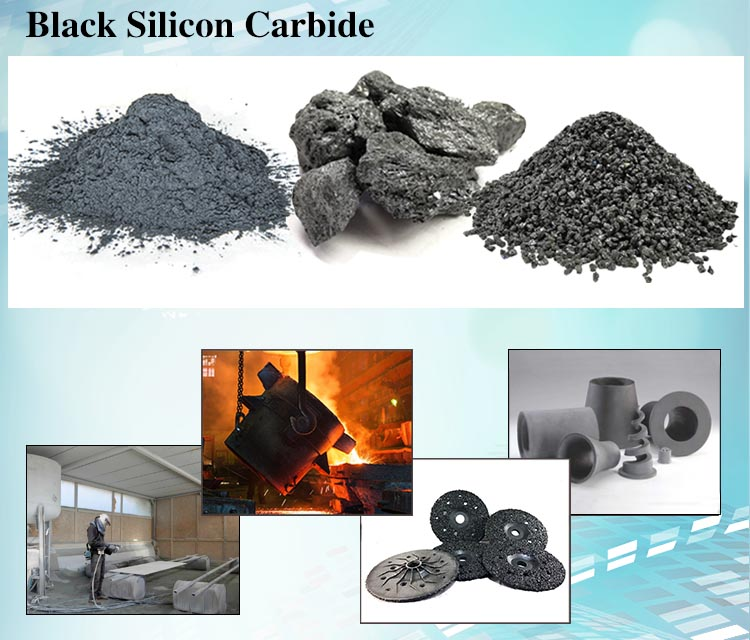
Black silicon carbide (also called segment sand/ refractory sand) refers to coarse, sized SiC particles (typically 0–10mm) mainly used in refractories & metallurgy. It’s not the fine grit for grinding wheels, but larger crushed grains for high-temperature linings.
Key Specifications
- Standard sizes: 0–1mm, 1–3mm, 3–5mm, 5–10mm
- Purity grades (SiC min): 90%, 95%, 97%, 98%
- Typical impurities: Fe₂O₃ ≤ 1.5–2.0%, Free C ≤ 1.0–2.0%
1. Advantages as Refractory Raw Material
- High temperature resistance: Melting point ~2600°C, excellent thermal stability in high-temperature furnaces
- High thermal conductivity & low thermal expansion: Resists thermal shock, not easy to crack under rapid heating/cooling
- Corrosion resistance: Resists erosion by molten iron, slag, alkali, and non-ferrous metal melts
- High hardness & wear resistance: Great anti-abrasion for furnace linings and structural parts
- Oxidation resistance (with reasonable formulation): Stable in reducing & neutral atmospheres
2. Main Refractory Applications
- Furnace lining & refractory bricks
- Precast SiC refractory bricks, fired bricks for industrial kilns
- Used in steelmaking, iron smelting, non-ferrous smelting furnaces
- Kiln furniture / furnace structural parts
- Kiln shelves, saggers, beams, supports for ceramic firing, powder metallurgy
- Long service life under continuous high temperature
- Iron & steel industry
- Tundish linings, blast furnace inner lining, runner castables
- Resists molten iron/slag erosion
- Aluminum & non-ferrous metallurgy
- Lining materials for aluminum electrolytic cells
- Anti-corrosion blocks for molten aluminum tanks
- Monolithic refractories (castables / ramming mixes)
- Black SiC grit/powder added to high-temperature castables
- Improves wear resistance, thermal shock resistance and service life
3. Grade & Particle Requirements for Refractory
- Use low-iron, high-purity metallurgical/refractory grade black SiC
- Coarse grit + fine powder compound gradation for dense refractory casting/bricks
- Strict control of free silicon, carbon and oxide impurities
4. Difference: Black SiC vs Green SiC for Refractory
- Black SiC: Lower cost, dominant for general refractory, metallurgical furnace linings, heavy anti-slag scenarios
- Green SiC: Higher purity, more for high-end ceramics, precision grinding, advanced refractory in ultra-high temp oxidizing environments