
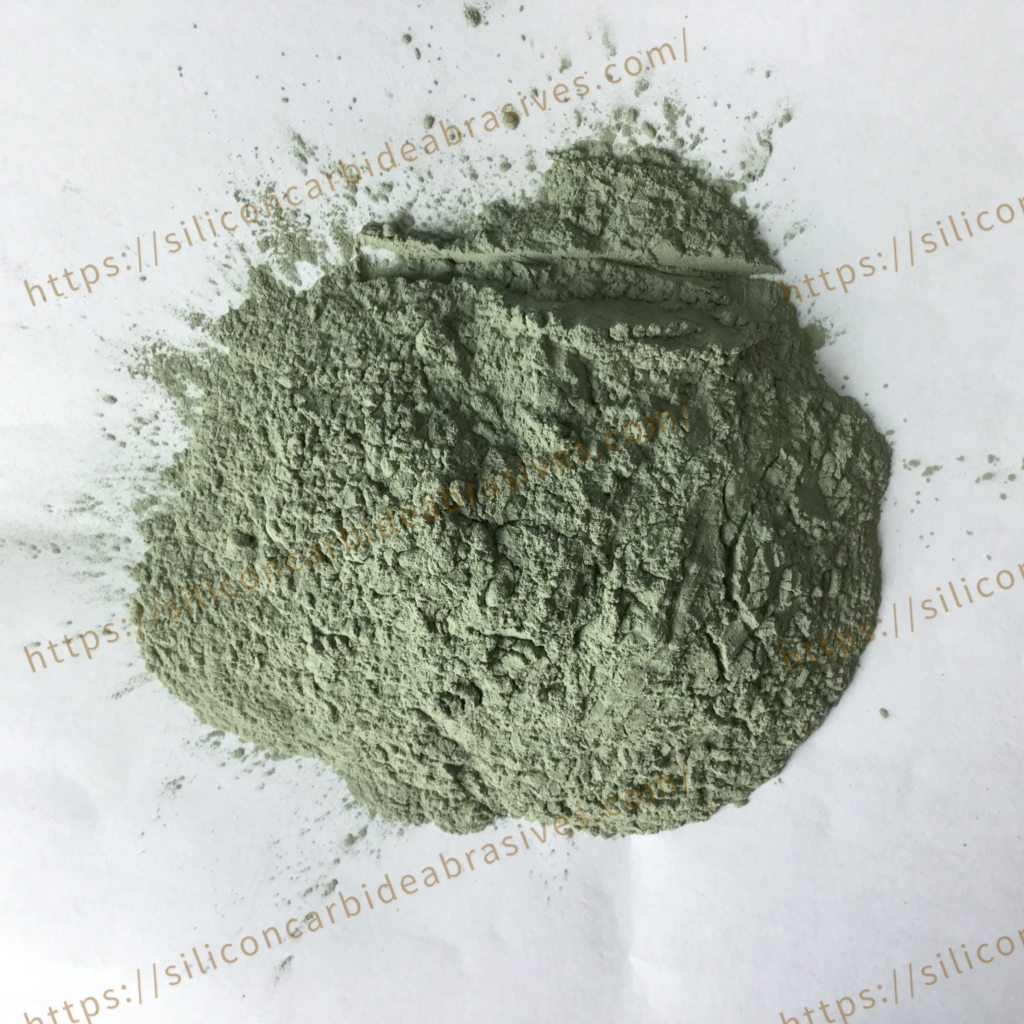
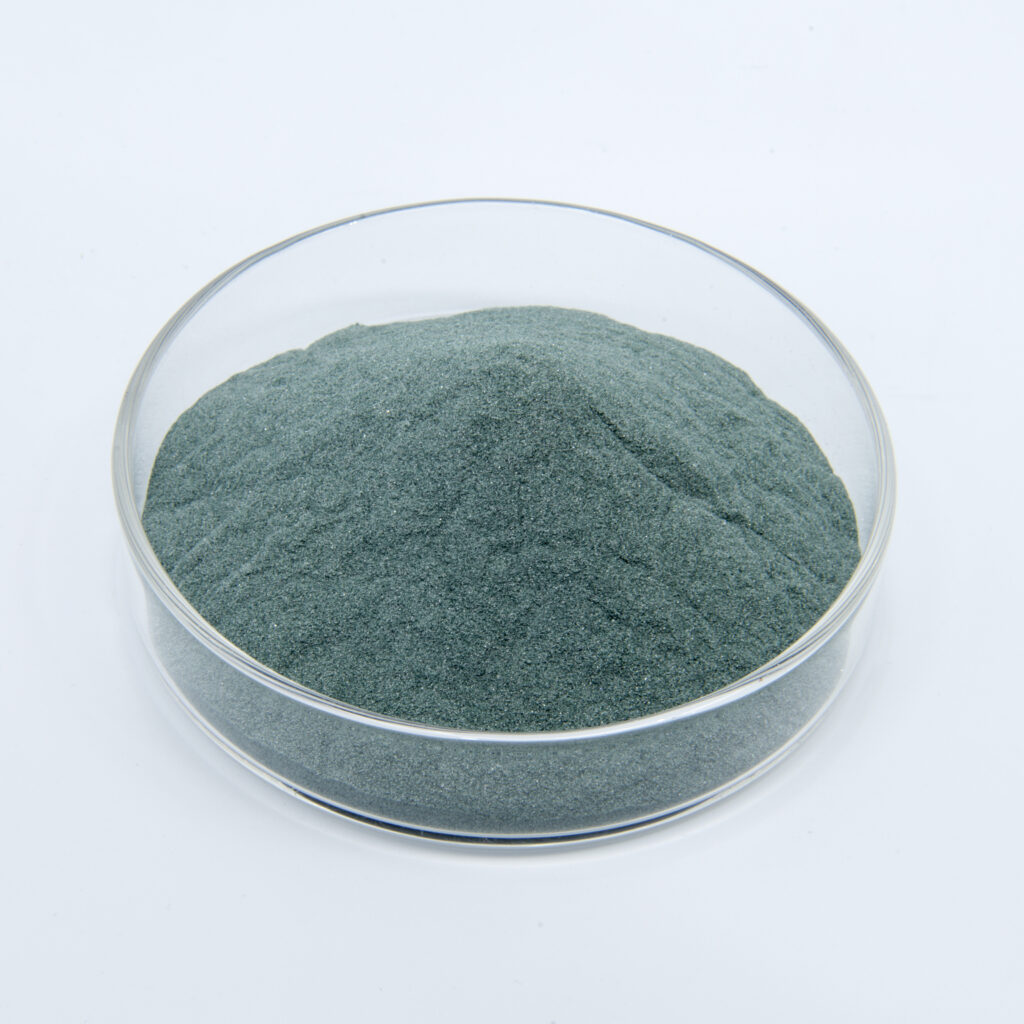
Green Silicon Carbide (Green SiC) Powder for the Optoelectronics Industry
Application: Removing White Haze
The so-called white skin / white haze in optoelectronic processing refers to the hazy white layer, micro-cracks and subsurface damage layer formed on optical glass, cover glass and optical components after cutting, CNC machining and edge grinding. Green silicon carbide micropowder is applied in wet lapping to eliminate this hazy layer, serving as a pre-process before cerium oxide fine polishing.
Why Green Silicon Carbide Micropowder
- High hardness and good self-sharpening property. Mohs hardness 9.4. Sharp particle edges keep generating new cutting edges during lapping, delivering stable stock removal for white haze removal without slipping. Black SiC carries more impurities, while white fused alumina tends to blunt easily.
- High purity, low iron and low free carbon. SiC ≥98.5%, Fe₂O₃ ≤0.4%, free carbon ≤0.2%. Acid-washed and water-classified powder avoids yellow stains and surface contamination, meeting strict cleanliness requirements of optoelectronic products.
- Good thermal conductivity. It dissipates heat fast and reduces thermal stress on glass, lowering risks of edge chipping and recurring white haze. Suitable for ultra-thin cover glass, quartz, borosilicate glass and sapphire substrates.
- Tight particle size distribution with strictly controlled D100. Oversized grains are the main cause of scratches and rejects.
Common Particle Sizes for White Haze Removal
- Heavy white haze, obvious tool marks after CNC edge grinding: 800#, 1000#, 1200#
- Standard white haze removal (most widely used): 1500#, 2000#
- Light white haze, small stock removal and high scratch risk control: 2500#, 3000#
Typical Wet Lapping Process
- Prepare lapping slurry: Green SiC micropowder + water + dispersant / lubricant. Solid content: 15%–30% (adjust according to equipment and haze severity).
- Equipment: Double-sided lapping machine, sweeping machine, surface grinder. Lapping plate: cast iron or resin plate.
- Process flow: Cleaning → Green SiC lapping (remove subsurface white haze layer) → Thorough rinsing (complete removal of residual SiC powder to prevent scratches in subsequent cerium oxide polishing) → Fine mirror polishing with cerium oxide.
Comparison with Other Abrasives
- Green SiC: Preferred for white haze removal. Balanced cutting performance, low contamination, stable yield. Higher price than black SiC.
- Black Silicon Carbide: Low cost, high iron impurity, easy staining. Mainly for low-end glass.
- White Fused Alumina: Poor self-sharpening, grains round and blunt, low removal efficiency for white haze.
- Diamond Powder: Extremely strong cutting ability, high cost. Mostly for superhard substrates, rarely used for ordinary optoelectronic cover glass haze removal.