
The use of silicon carbide (SiC) for stone polishing is a classic and highly effective application.
Why Silicon Carbide?
Silicon carbide is an ideal abrasive for stone due to its unique combination of properties:
Extreme Hardness: With a Mohs hardness of 9.5, it is significantly harder than almost all natural stones (granite ~6-7, marble ~3-5, quartzite ~7). This allows it to cut and abrade the stone efficiently.
Sharp Fracture: SiC grains fracture to form new, sharp edges during use (self-sharpening property). This maintains cutting efficiency longer compared to some other abrasives that become rounded.
Chemical Inertness: It does not react with water or the minerals in most stones, ensuring a clean, uncontaminated polish.
Thermal Conductivity: Helps dissipate heat generated during polishing, reducing the risk of “burning” or damaging the stone surface.
Cost-Effectiveness: It offers an excellent balance of performance and cost, especially compared to diamond abrasives.
| TYPICAL CHEMICAL ANALYSIS | |
| SiC | ≥99.05% |
| SiO2 | ≤0.20% |
| F,Si | ≤0.03% |
| Fe2O3 | ≤0.10% |
| F.C | ≤0.04% |
| TYPICAL PHISICAL PROPERTIES | |
| Hardness: | Mohs:9.5 |
| Melting Point: | Sublimes at 2600 ℃ |
| Maximum service temperature: | 1900℃ |
| Specific Gravity: | 3.20-3.25g/cm3 |
| Bulk density(LPD): | 1.2-1.6 g/cm3 |
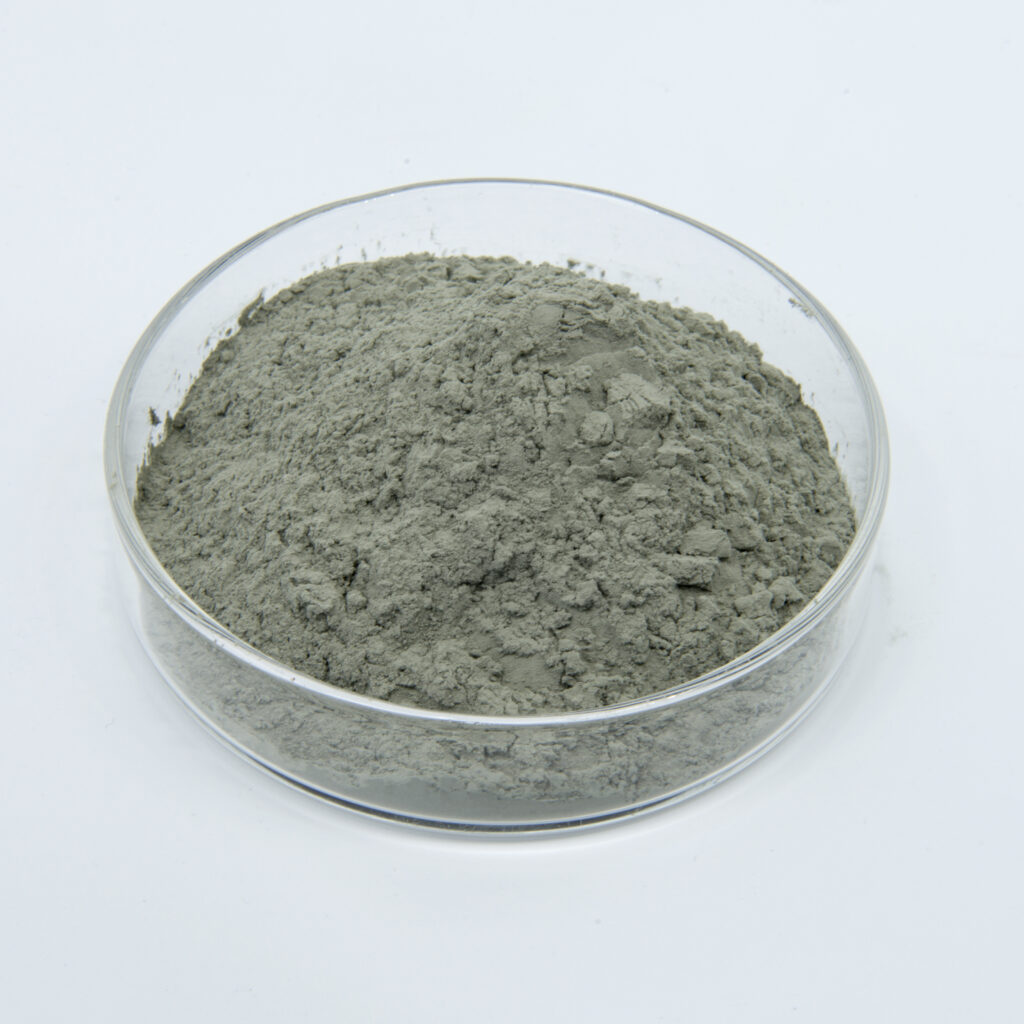
| Color: | Green |
| Particle shape: | Hexagonal |
| ITEMS: | |
| Grit:4# 5# 6# 8# 10# 12# 14# 16# 20# 22# 24# 30# 36# 40# 46# 54# 60# 70# 80# 10# 12# 14# 16# 20# 22# 24# 30# 36# 40# 46# 54# 60# 70# 80# 90# 100# 120# 150# 180# 220# Micropowder: JIS:240# 280# 320# 360# 400# 500# 600# 700# 800# 1000# 1200# 1500# 2000# 2500# 3000# 4000# 6000# 8000# 10000# FEPA: F230 F240 F320 F360 F400 F500 F600 F800 F1000 F1200 F1500 F2000 | |
Types and Forms of Silicon Carbide for Stone
Loose Grains/Powders:
For Slab Grinding & Leveling (Bullnosing): Used with resin-bonded or metal-bonded grinding wheels for initial shaping and flattening of stone slabs.
For Tumbling: Added to rotary tumblers with water to smooth and polish stone tiles, pavers, or decorative items.
Bonded Abrasives:
Grinding Wheels & Cup Wheels: SiC grains are bonded with resin, vitrified (glass), or metal bonds. These are used on angle grinders or floor machines for aggressive stock removal, shaping, and smoothing rough stone surfaces.
Coated Abrasives (Sandpaper):
Flexible Polishing Pads/Discs: Silicon carbide is embedded onto backing materials like paper, cloth, or mesh. These are used in wet/dry sanding.
Grit Sequence: They come in a progressive grit sequence, e.g., 50, 100, 200, 400, 800, 1500, 3000. The process starts with coarse grits (for grinding out scratches) and proceeds step-by-step to finer grits (for refining the surface to a polish).
Specialized Compounds:
Polishing Powders or Slurries: Ultra-fine micronized silicon carbide (e.g., F1200, F2000) is mixed with water or a light carrier to form a paste. This is applied with a felt pad for the final polishing stage on some softer stones (like marble) to achieve a high-gloss finish.

The Polishing Process: From Rough to Shiny
Grinding (Coarse Grits: #50 – #200):
Goal: Remove deep saw marks, level surfaces, and shape the stone.
Tools: Resin-bonded grinding wheels or very coarse grit sanding discs.
Action: Aggressive material removal. Leaves a rough, scratched surface.
Honing / Smoothing (Medium Grits: #200 – #800):
Goal: Remove the scratches from the previous stage, progressively refining the surface to a uniform matte or “honed” finish.
Tools: Sequential use of finer grit sanding discs (e.g., #400, #800) under water (wet polishing is standard to control dust, cool the stone, and lubricate).
Action: Each finer grit removes the scratch pattern of the prior, coarser grit.
Polishing (Fine Grits: #1500 – #3000+ & Compounds):
Goal: Achieve a glossy, reflective surface.
Tools: Very fine grit SiC polishing pads (#1500, #3000) or polishing compounds with micronized SiC.
Action: At this microscopic level, the abrasive is no longer “cutting” but burnishing. It creates extremely fine, uniform scratches that are too small for the eye to resolve, resulting in optical clarity and shine. The final step often uses a clean, soft buffing pad to enhance the luster.
Comparison with Diamond and Other Abrasives
vs. Diamond: Diamond is harder (Mohs 10) and more durable. Diamond abrasives are preferred for hard stones (granite, engineered quartz) and high-speed, industrial machinery. Silicon carbide is often the choice for softer stones (marble, limestone), manual work, finer finishing steps, and where cost is a major factor.
vs. Aluminum Oxide (Al₂O₃): SiC is harder and sharper than standard Al₂O₃, making it cut faster on stone. Al₂O₃ is tougher and more common for metalworking.
vs. Ceramic Aluminas: Modern ceramic alumina abrasives can offer longer life but are often part of specialized blended products.
Key Considerations for Use
Stone Type: Softer, calcium-based stones (marble, travertine, limestone) are ideal for SiC. For very hard stones like granite, diamond is often more efficient for the coarse stages, but SiC can still be used for fine polishing.
Wet vs. Dry: Wet polishing is almost always recommended with SiC on stone. It extends pad life, eliminates hazardous silica dust, and produces a better finish.
Grit Progression: Never skip more than one grit step. Jumping from #100 to #800 will not remove the deep #100 scratches, wasting time and materials.
Pressure and Speed: Use moderate pressure and allow the abrasive to do the work. High RPMs on hard stones can generate excessive heat.
Silicon carbide is a versatile, cost-effective, and essential abrasive in the stone industry. It excels in the progressive refinement process, transforming a rough, sawn stone surface into a smooth, honed, or brilliantly polished finish. Its role is particularly prominent in processing softer natural stones and in applications ranging from large-scale slab finishing to detailed artisan work. The fundamental principle is systematic scratch pattern reduction, where SiC’s hardness and sharpness make it the perfect tool for each step of the journey from raw stone to refined surface.