
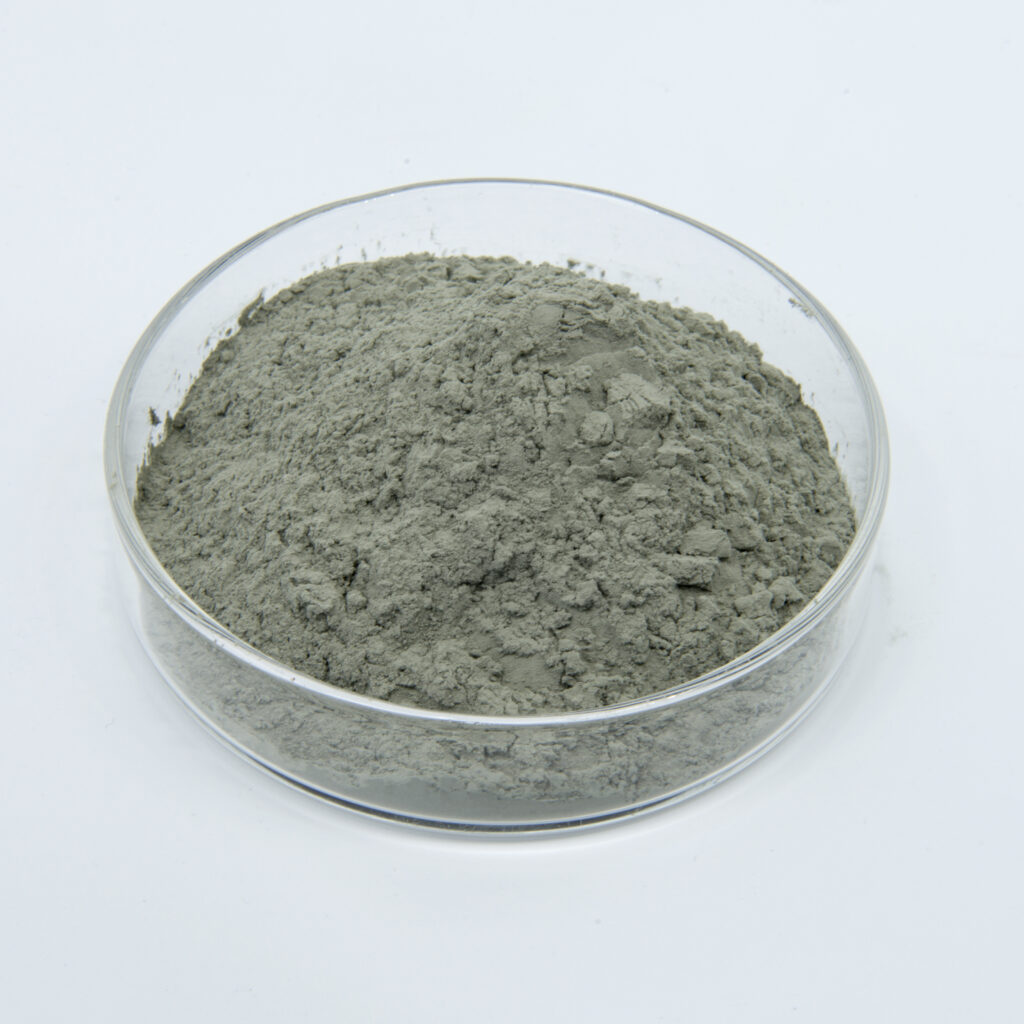
Green silicon carbide (SiC) lapping powder is an engineered abrasive composed of micron- or submicron-sized particles of high-purity alpha silicon carbide. Its distinctive green color comes from trace aluminum impurities during synthesis.
Key Properties:
Extreme Hardness (9.5 on Mohs scale): making it ideal for hard materials.
Sharp, Brittle Fracture: Produces fresh, acute cutting edges that enhance material removal rates.
High Thermal Conductivity: Efficiently dissipates heat, minimizing workpiece thermal damage.
Chemical Inertness: Resists reaction with most workpieces and coolants, preserving material integrity.
Controlled Particle Geometry: Engineered for consistent, predictable cutting action.
2. Manufacturing Process
Acheson Furnace Synthesis: High-purity quartz sand and petroleum coke are heated to ~2200°C in an electric resistance furnace, forming SiC crystals.
Crushing & Milling: Large crystals are crushed and ground into coarse powder.
Precision Classification: Critical step using hydroclassification (for narrowest size distribution) or air classification.
Chemical Purification: Acid washing (HCl/HF) removes metallic impurities (iron, aluminum) and surface contaminants.
Dehydration & Drying: Washed slurry is filtered and dried.
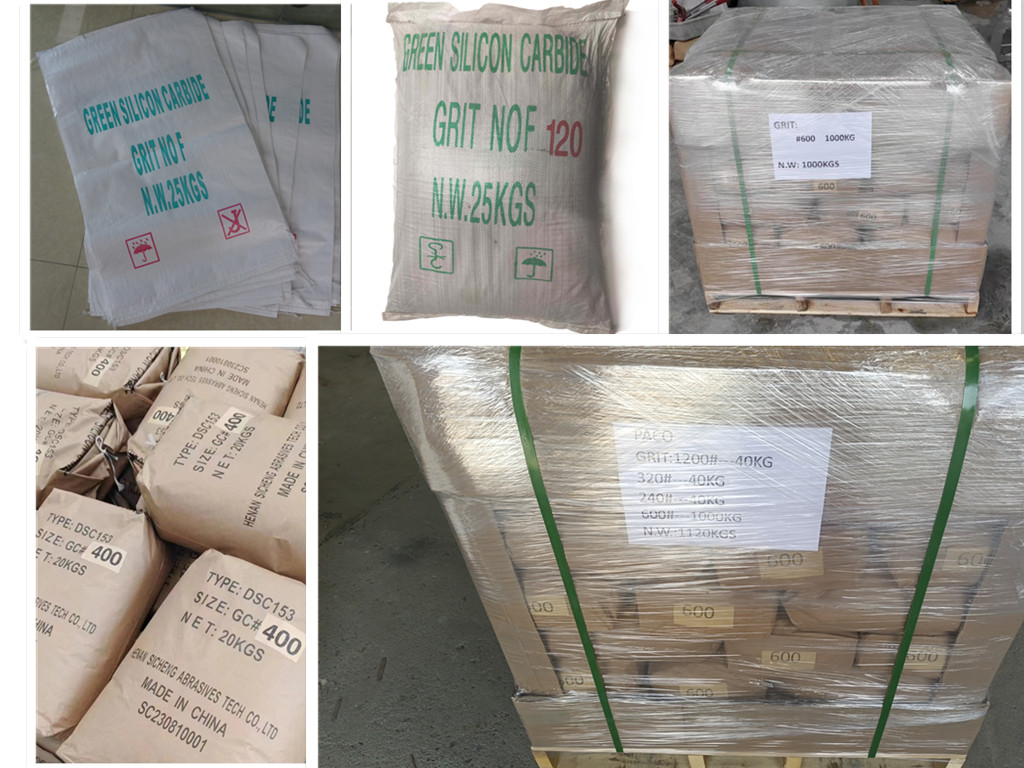
Final Screening & Packaging: Ensures absence of agglomerates; packaged by particle size grade.
3. Technical Specifications
A. Particle Size Standards:
FEPA/ISO Standard: Designated as “F” grades (e.g., F400, F600, F1200). Higher numbers indicate finer particles.
JIS/Chinese Standard: “W” series (e.g., W40, W14, W7, W2.5, W0.5). Numbers approximate particle diameter in microns.
Typical Range: Coarse (W40-W14) → Medium (W10-W5) → Fine (W3.5-W1) → Ultra-fine (W0.5 and below).
B. Critical Parameters:
Narrow Size Distribution: Essential for scratch-free surfaces; eliminates oversized particles.
High Purity (>99% SiC): Low iron content (<0.2%) prevents staining and contamination.
Controlled Morphology: Angular, blocky shapes preferred for lapping.
4. Primary Applications
| Industry | Applications | Typical Grit Range |
|---|---|---|
| Optics & Photonics | Lenses, prisms, optical windows, laser crystals, fiber optics | W14 – W0.5 |
| Semiconductor | Silicon wafer backside thinning, compound semiconductor substrates (GaAs, SiC) | W7 – W1 |
| Advanced Ceramics | Alumina, zirconia, silicon nitride components, ceramic bearings | W20 – W3.5 |
| Hard Materials | Sapphire (LED, watch crystals, smartphone covers), quartz, glass ceramics | W10 – W1 |
| Metallurgy | Hardened steels, titanium alloys, tungsten carbide, metallographic sample prep | W40 – W5 |
| Precision Engineering | Sealing surfaces, gauge blocks, valve components | W10 – W2.5 |
5. Lapping Methodology
A. Slurry Preparation:
Mix powder with carrier fluid (water, glycol, or specialized oils) at 10-30% concentration by weight.
Additives: Dispersants (sodium polyacrylate), pH stabilizers (KOH), corrosion inhibitors.
Ultrasonic dispersion recommended for ultra-fine grades to prevent agglomeration.
B. Equipment & Process:
Machines: Single/double-sided lapping machines, planetary systems, free-abrasive machines.
Lapping Plates: Typically cast iron, tin, or copper for hard materials; softer plates for delicate work.
Parameters: Pressure (10-50 kPa), rotation speed (30-120 rpm), slurry flow rate, temperature control.
Post-Processing: Thorough cleaning (ultrasonic + surfactant) is critical to remove embedded abrasive.
6. Comparative Analysis with Alternatives
| Abrasive Type | Hardness (Mohs) | Relative Cost | Best For | Limitations |
|---|---|---|---|---|
| Green SiC | 9.5 | Low-Medium | Hard brittle materials, high MRR applications | Can produce deeper scratches than softer abrasives |
| White Aluminum Oxide | 9.0 | Low | Steels, ferrous alloys, fine finishing | Lower hardness limits use on ultra-hard materials |
| Diamond | 10.0 | Very High | Polycrystalline diamond, CBN, sapphire | High cost, requires specialized equipment |
| Ceria (CeO₂) | 6-7 | Medium | Final polishing of optical glass | Chemical-mechanical action, not for heavy stock removal |
| Boron Carbide | 9.3 | High | Specialized ceramic finishing | Expensive, limited availability |