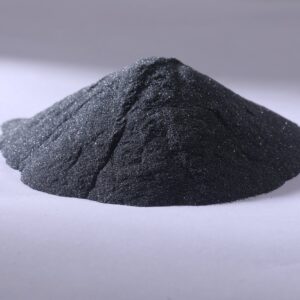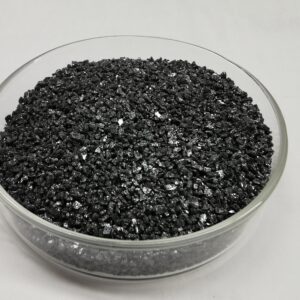
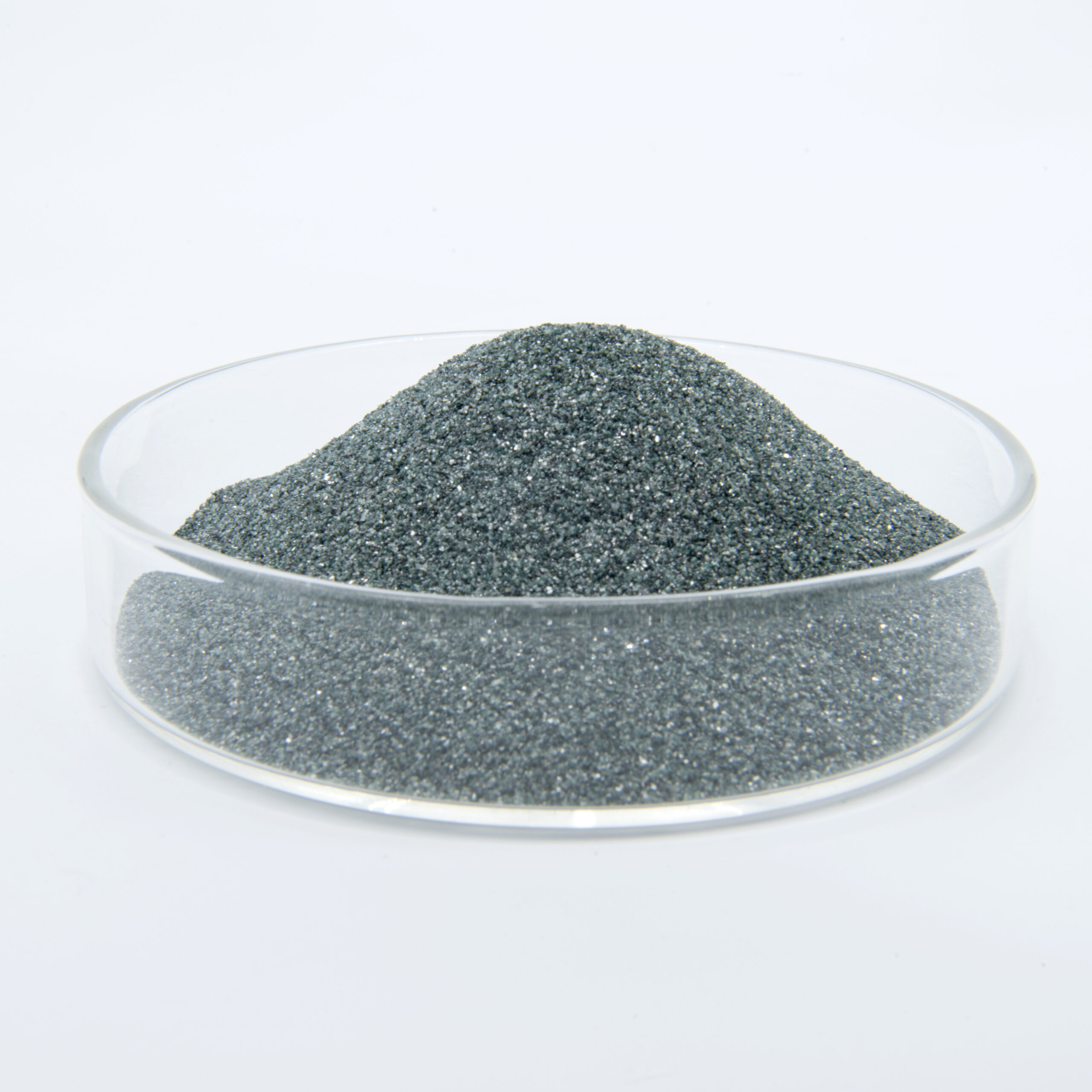
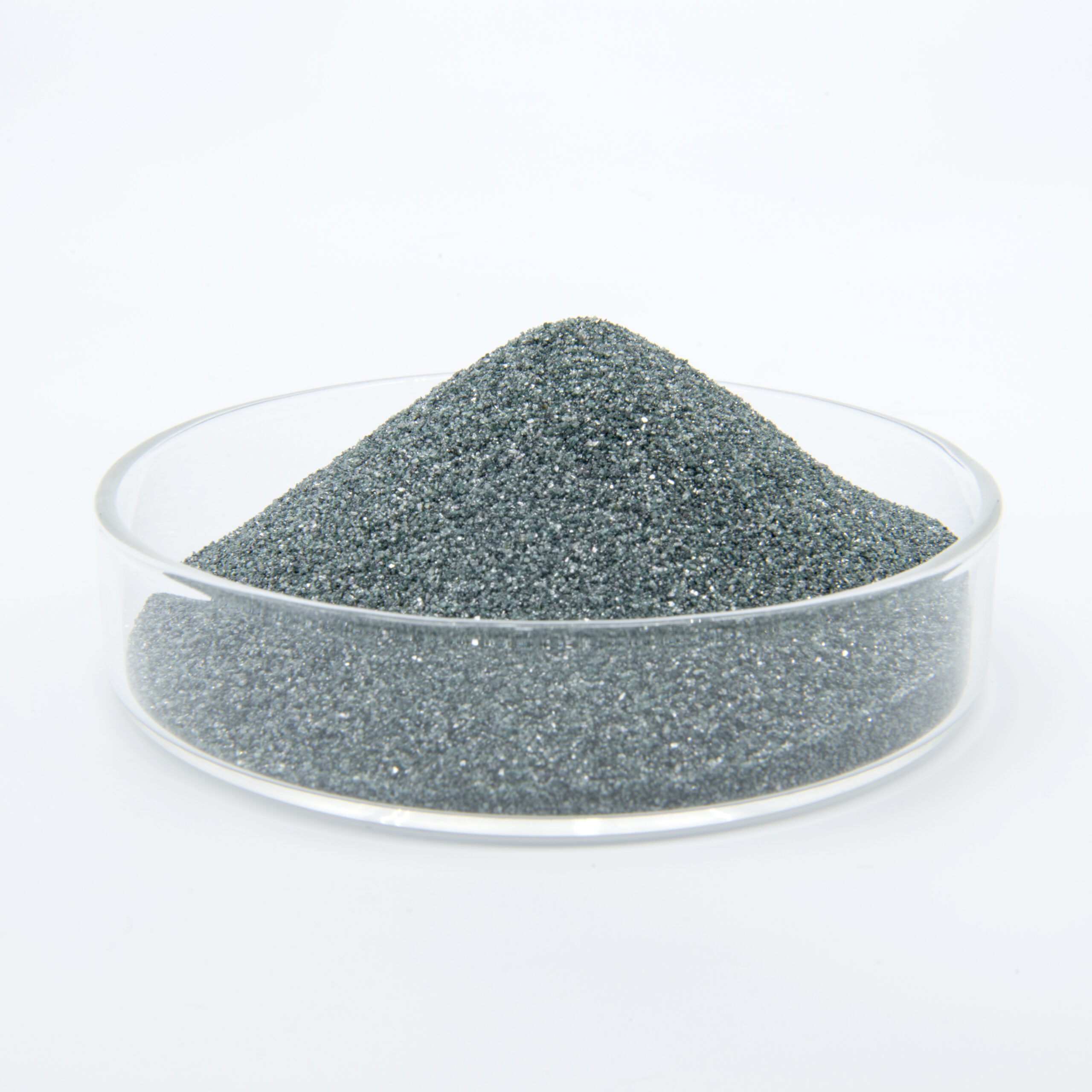
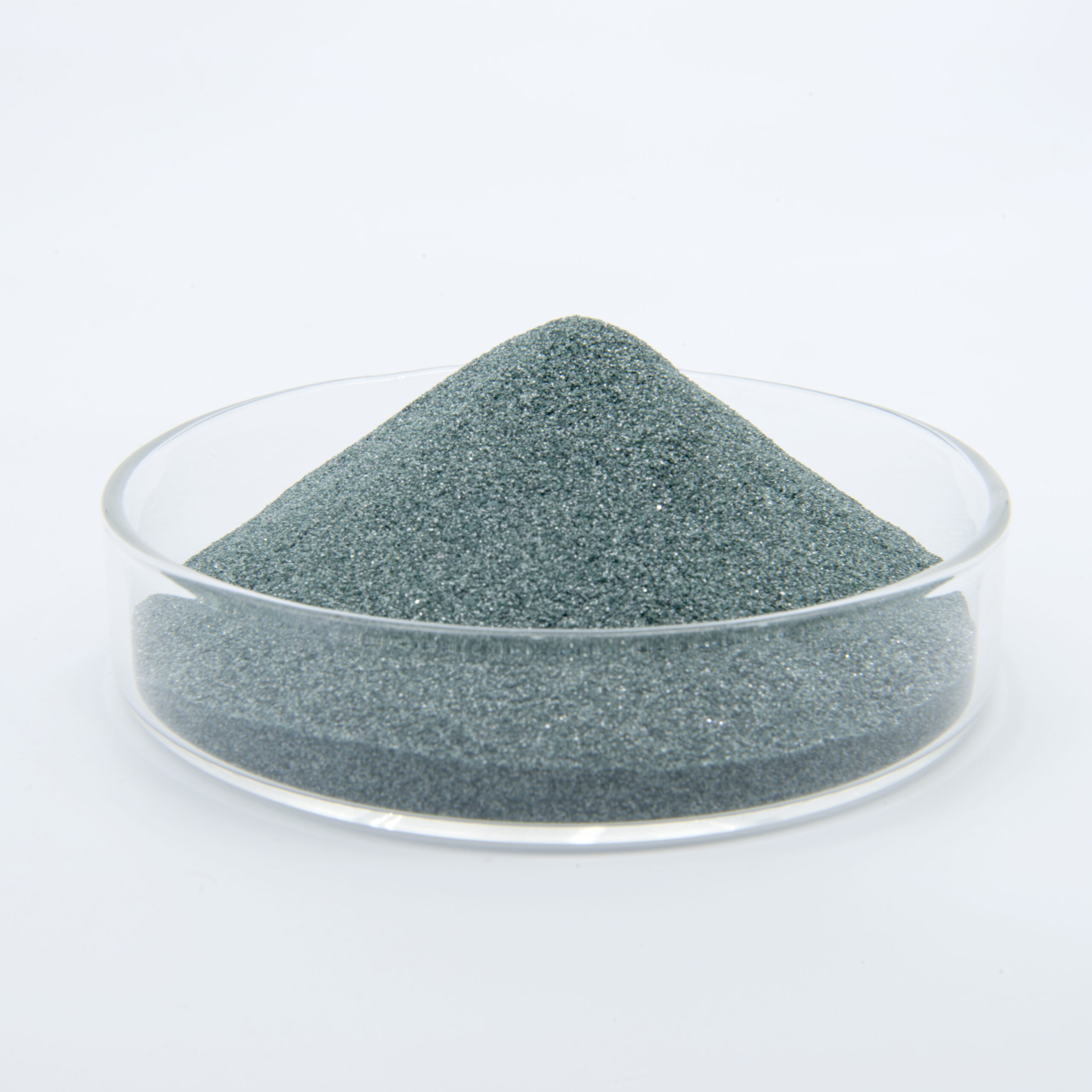
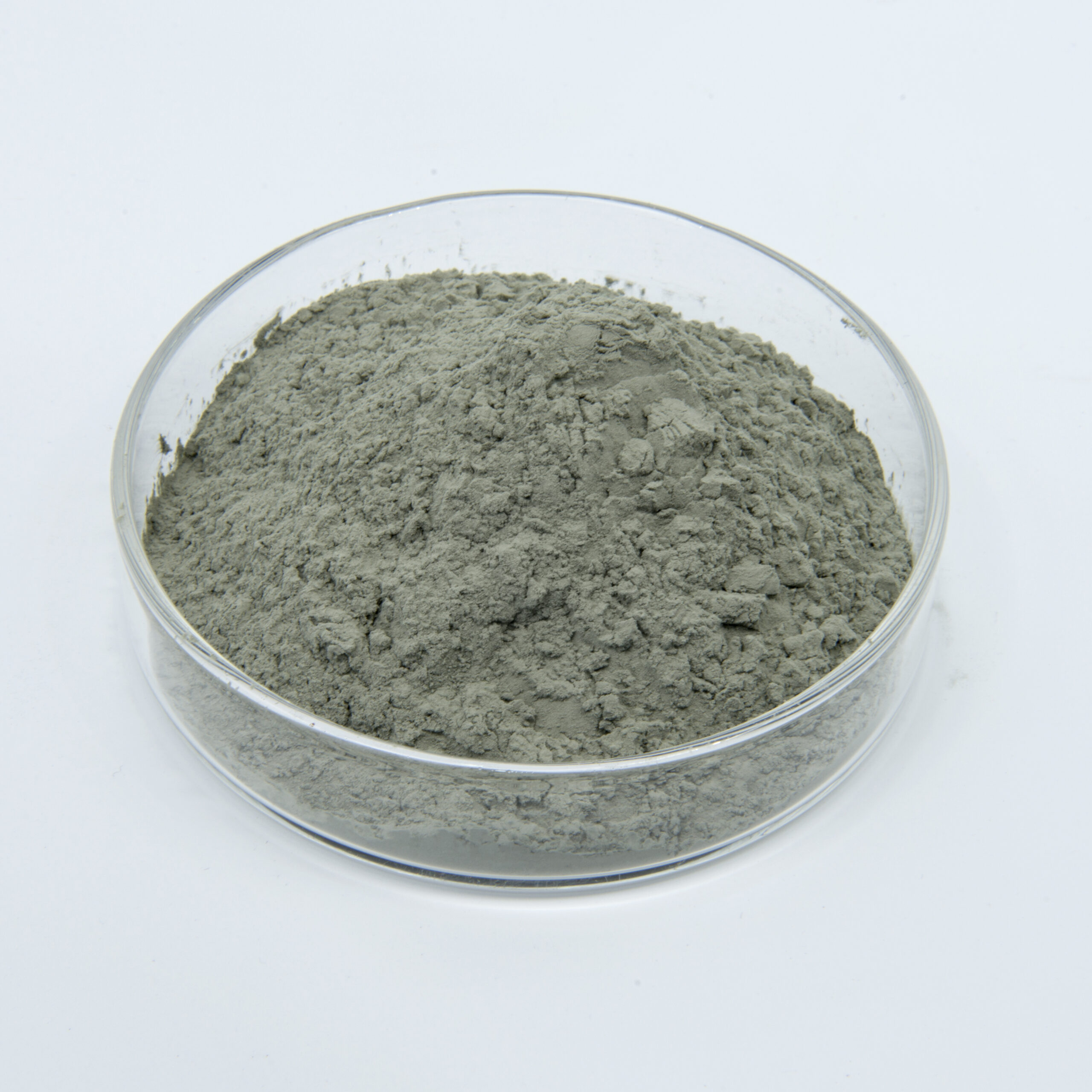
Green Silicon Carbide (GC) is a man-made abrasive made of high-purity quartz sand, petroleum coke (or coal coke) and a small amount of salt in a resistance furnace at high temperature (about 2200°C or above). It is named because of its green color. It belongs to the silicon carbide (SiC) family with the common black silicon carbide, but there are significant differences in performance and application.
Main characteristics
–High hardness
The Mohs hardness reaches 9.2-9.3, second only to diamond and cubic boron nitride (CBN), suitable for processing high-hardness materials (such as cemented carbide, ceramics, glass, etc.).
–Sharpness
The crystal structure is more brittle, the abrasive grains are sharp, and the cutting ability is strong. It is suitable for precision grinding and processing with high surface finish requirements.
–High thermal stability
–High temperature resistance of more than 1600°C, suitable for high-speed grinding or dry grinding conditions.
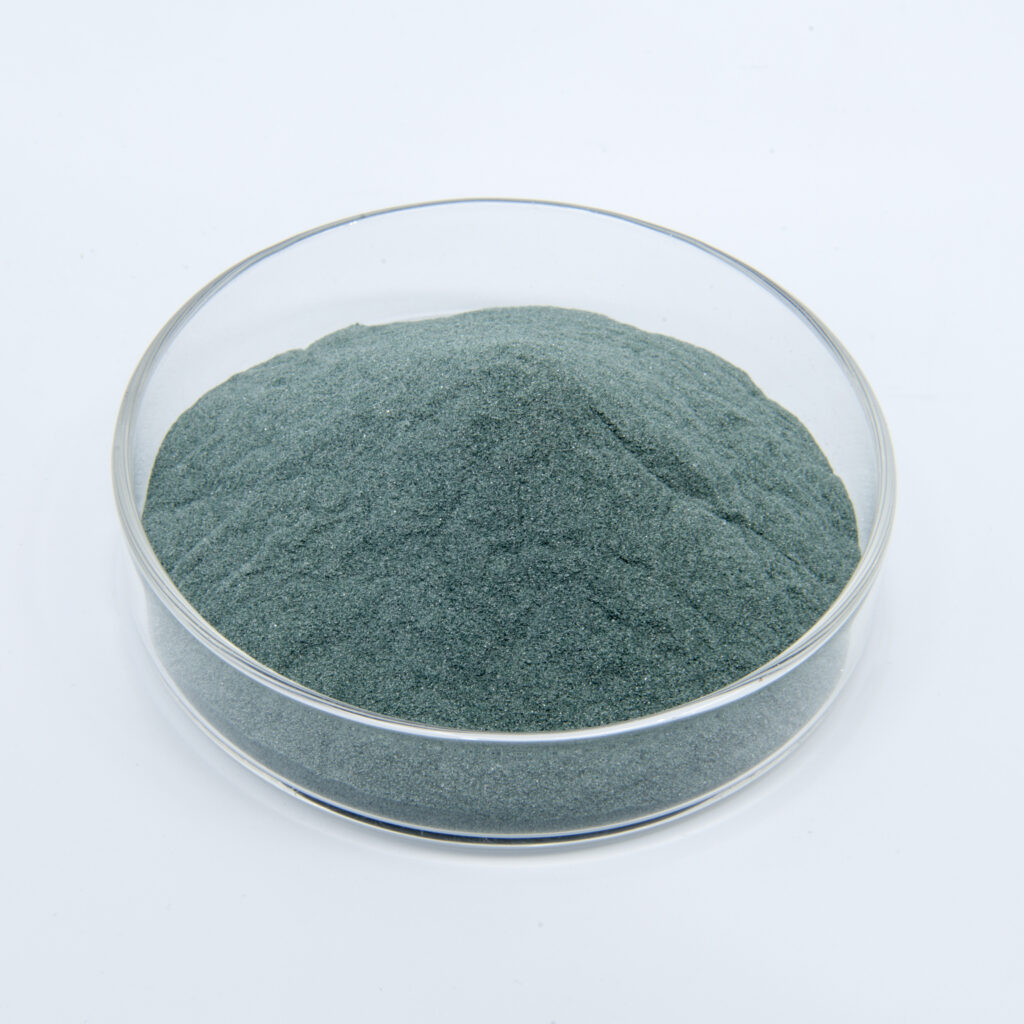
| Grit | 1 | 2 | 3 | 3 and 4 | 5 | Q5max,% | ||||
| W1,um | Q1,% | W2,um | Q2max,% | W3,um | Q3min,% | W4,um | Q3+Q4min,% | W5,um | ||
| F8 | 4000 | 0 | 2800 | 20 | 2360 | 45 | 2000 | 70 | 1700 | 3 |
| F10 | 3350 | 0 | 2360 | 20 | 2000 | 45 | 1700 | 70 | 1400 | 3 |
| F12 | 2800 | 0 | 2000 | 20 | 1700 | 45 | 1400 | 70 | 1180 | 3 |
| F14 | 2360 | 0 | 1700 | 20 | 1400 | 45 | 1180 | 70 | 1000 | 3 |
| F16 | 2000 | 0 | 1400 | 20 | 1180 | 45 | 1000 | 70 | 850 | 3 |
| F20 | 1700 | 0 | 1180 | 20 | 1000 | 45 | 850 | 65 | 710 | 3 |
| F24 | 1180 | 0 | 850 | 25 | 710 | 45 | 600 | 65 | 500 | 3 |
| F30 | 1000 | 0 | 710 | 25 | 600 | 45 | 500 | 65 | 425 | 3 |
| F36 | 850 | 0 | 600 | 25 | 500 | 45 | 425 | 65 | 355 | 3 |
| F40 | 710 | 0 | 500 | 30 | 425 | 40 | 355 | 65 | 300 | 3 |
| F46 | 600 | 0 | 425 | 30 | 355 | 40 | 300 | 65 | 250 | 3 |
| F54 | 500 | 0 | 355 | 30 | 300 | 40 | 250 | 65 | 212 | 3 |
| F60 | 425 | 0 | 300 | 30 | 250 | 40 | 212 | 65 | 180 | 3 |
| F70 | 355 | 0 | 250 | 25 | 212 | 40 | 180 | 65 | 150 | 3 |
| F80 | 300 | 0 | 212 | 25 | 180 | 40 | 150 | 65 | 125 | 3 |
| F90 | 250 | 0 | 180 | 20 | 150 | 40 | 125 | 65 | 106 | 3 |
| F100 | 212 | 0 | 150 | 20 | 125 | 40 | 106 | 65 | 90 | 3 |
| F120 | 180 | 0 | 125 | 20 | 106 | 40 | 90 | 65 | 75 | 3 |
| F150 | 150 | 0 | 106 | 15 | 90 | 40 | 75 | 65 | 63 | 3 |
| F180 | 125 | 0 | 90 | 15 | 75 | * | 63 | 40 | 53 | * |
| F220 | 106 | 0 | 75 | 15 | 63 | * | 53 | 40 | 45 | * |
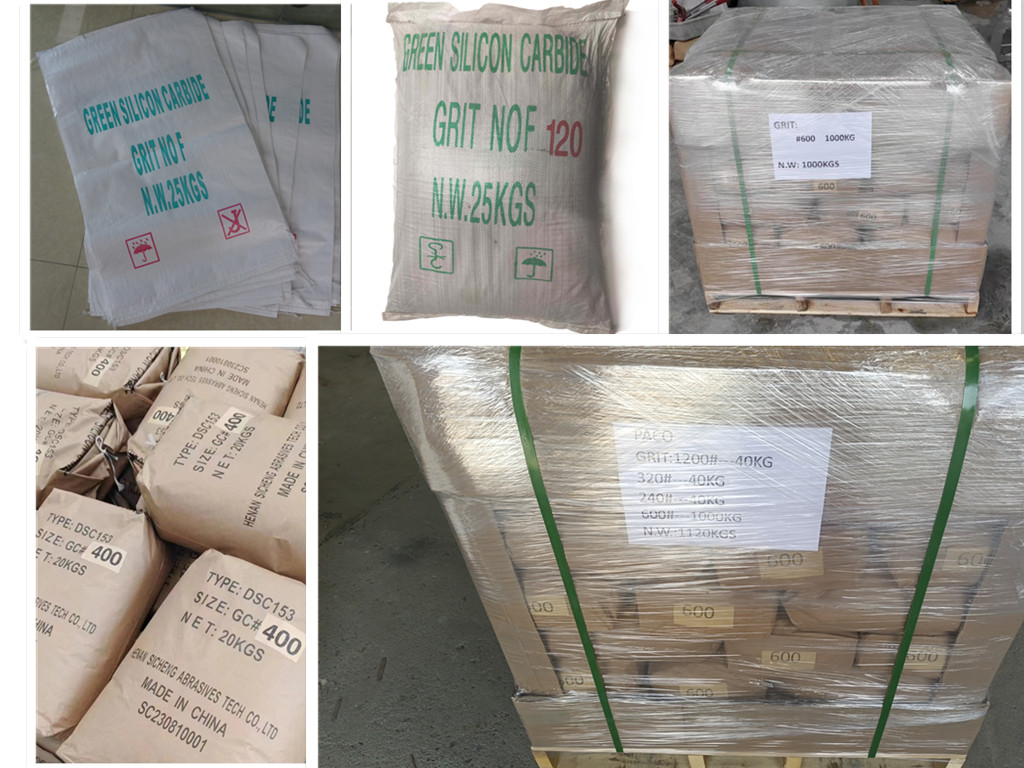
The application of green silicon carbide (GC) in diamond grinding discs is mainly reflected as an auxiliary abrasive or filler to optimize the comprehensive performance of the grinding disc. The following are its specific applications and functions:
1. Auxiliary abrasive function
Complementary hardness: Green silicon carbide has a high hardness, which is lower than diamond, . As a secondary abrasive in diamond grinding discs, it can share the cutting task, especially in the rough grinding stage to improve efficiency.
2. Reduce costs and optimize performance
Cost control: Diamond is expensive, and adding an appropriate amount of green silicon carbide can reduce the amount of diamond while maintaining a high grinding efficiency.
Heat dissipation and chip removal: Green silicon carbide particles help to increase the porosity in the grinding disc, improve heat dissipation and chip removal, and reduce the risk of workpiece burns.
3. Enhancement of binder system
Binder bonding: In metal or resin binder systems, green silicon carbide can better bond with the binder, improve the holding force of abrasive particles, and reduce the premature shedding of diamond particles.
Wear resistance balance: The moderate wear of green silicon carbide can help the diamond abrasive particles to be exposed in time and maintain the self-sharpening of the grinding disc.
4. Application scenarios
Non-metallic material processing: In the rough grinding stage of glass and stone, green silicon carbide can quickly remove materials, and diamonds are used for subsequent fine grinding.
Polishing transition: In the intermediate grinding process before polishing, green silicon carbide can reduce the consumption of diamonds and reduce costs.
5. Precautions
Proportion design: The ratio of the two needs to be adjusted according to the processing material. High-hardness materials (such as tungsten carbide) are mainly diamonds, supplemented by green silicon carbide; medium and low hardness materials can increase the proportion of green silicon carbide.
Particle size matching: The particle sizes of the two need to be coordinated.
In short, green silicon carbide mainly plays a synergistic role in diamond grinding discs. Through reasonable material design and process matching, efficiency, cost and processing quality can be taken into account.